
What Is Digital Marketing? A Practical Guide for Growing Businesses
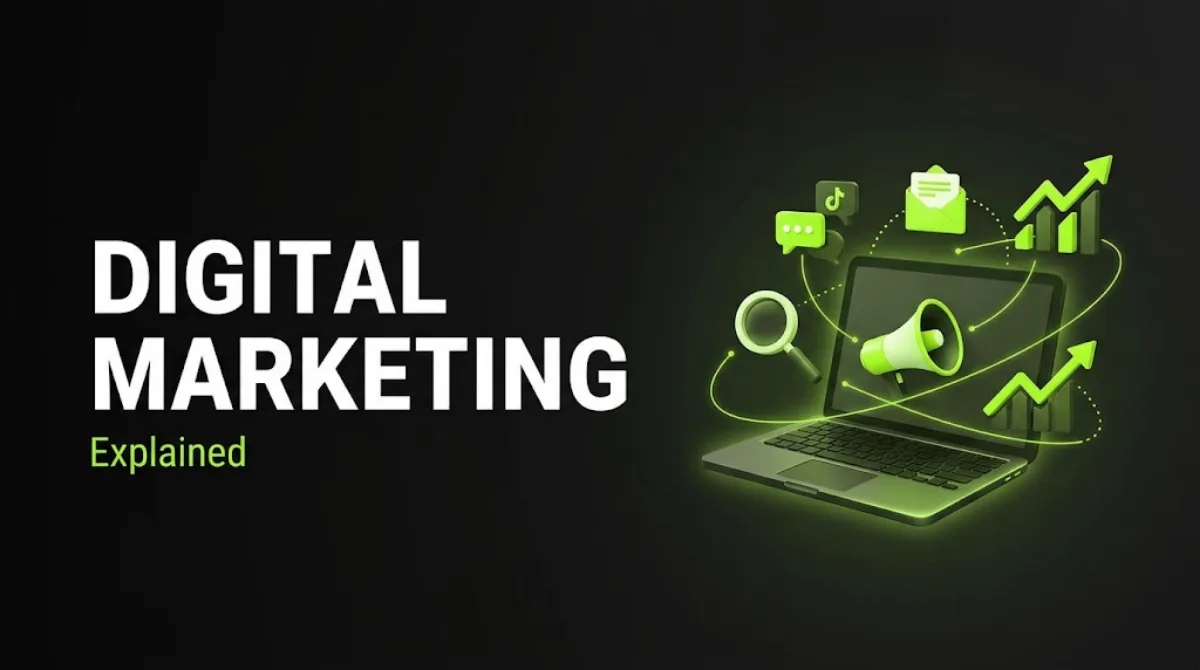
What is digital marketing? Digital marketing is the promotion of a business, product or service through online channels — search engines, websites, social media, email, paid ads and content — so that you can reach the right people, measure exactly what they do, and turn that attention into enquiries and sales. If traditional marketing is a billboard on Shahrah-e-Faisal, digital marketing is a billboard that tells you who looked at it, who called you afterwards, and which version of the message worked better.
I’m Hamza Zahid, an SEO specialist based in Karachi. I work with businesses in Pakistan and the UK, and the question I hear most from new clients is not “how do I rank?” but “where do I even start?” This guide is my plain-English answer to what is digital marketing and how to use it. I’ll explain what digital marketing actually includes, how the channels fit together, how I would plan it for a small or mid-sized business, and the mistakes that waste the most money.
What Is Digital Marketing, Really?
When people ask me what is digital marketing at its simplest, I say it comes down to three things. At its core, digital marketing is about three things: being found, being chosen and being measured. Being found means showing up where your customers already search or scroll. Being chosen means giving them a clear reason to contact you instead of a competitor. Being measured means tracking each step so you can spend more on what works and stop what doesn’t.
That last point is the big difference from print, radio or TV. With digital channels you can see which page a visitor landed on, which search term brought them, whether they filled in your form and, with the right setup, whether they became a paying customer. That feedback loop is what makes digital marketing so powerful for businesses with limited budgets.
The Main Types of Digital Marketing
Most digital marketing activity falls into a handful of channels. You do not need all of them on day one, but you should understand what each one is good at.
1. Search Engine Optimisation (SEO)
SEO is the work of improving your website so it ranks in Google’s organic (unpaid) results for searches your customers make. It covers technical health, on-page content, and authority signals such as backlinks. SEO is slow to start but compounds over time, which is why I treat it as the foundation of most strategies. Google’s own SEO Starter Guide is a good primer on how search works. If you want the full breakdown, read my guide to the types of SEO.
2. Pay-Per-Click Advertising (PPC)
PPC means paying for ads on Google, Bing or social platforms, usually per click. It is fast — you can be on page one today — but traffic stops the moment you stop paying. I use PPC to test which keywords and offers convert before investing months of SEO effort into them.
3. Social Media Marketing
Facebook, Instagram, TikTok, LinkedIn and YouTube are where people spend their free time. Social media is excellent for awareness, community and retargeting. In Pakistan especially, many buyers discover businesses on Instagram and Facebook before they ever search on Google.
4. Content Marketing
Content marketing is creating useful articles, videos, guides and tools that answer your audience’s questions. Good content feeds every other channel: it ranks in search, gives you something to share on social media, and builds trust before a sales conversation.
5. Email and WhatsApp Marketing
Email lists and WhatsApp broadcast lists are channels you own. No algorithm can take them away. They are ideal for repeat customers, offers, and nurturing leads who aren’t ready to buy yet.
6. Local Search and Google Business Profile
For any business that serves a city or area, your Google Business Profile and map pack rankings are often the biggest source of calls. I’ve written a full guide on local SEO in Pakistan and ranking in the map pack.
Digital Marketing Channels Compared
Here is how I explain the main channels to clients when we decide where to put the first rupee or pound.
| Channel | Speed of results | Cost model | Best for |
|---|---|---|---|
| SEO | Slow (months) | Time and expertise | Long-term, compounding traffic |
| Google Ads (PPC) | Fast (days) | Pay per click | Testing offers, urgent demand |
| Social media | Medium | Time or ad spend | Awareness, community, retargeting |
| Content marketing | Slow to medium | Time and expertise | Trust, education, supporting SEO |
| Email / WhatsApp | Fast once list exists | Low | Repeat sales and nurturing |
| Google Business Profile | Medium | Mostly free | Local calls and visits |
How to Build a Digital Marketing Plan: Step by Step
This is the process I follow when a business asks me to set up their digital marketing from scratch.
Step 1: Define one clear goal
“More sales” is not a goal you can plan around. “Get 30 qualified enquiries a month from Karachi for our interior design service” is. Choose one primary goal and a number you can measure.
Step 2: Understand your customer and their searches
Write down who buys from you, what problem they’re solving, and what they type into Google when they have that problem. Then validate it with real data. My keyword research guide walks through exactly how I do this with free and paid tools.
Step 3: Fix your website first
Every channel sends people to your website, so it has to load fast, work well on mobile, and make it obvious how to contact you. Before spending on ads, I always run an audit. You can follow my SEO audit guide to check the basics yourself.
Step 4: Pick two channels, not six
Small teams that try to be everywhere end up doing everything badly. For most local service businesses, I start with SEO plus Google Business Profile. For e-commerce brands, I usually pair SEO with paid social or Google Shopping. Add channels only when the first two are working.
Step 5: Set up tracking before you launch
Install Google Analytics 4 and Google Search Console, mark form submissions, calls and WhatsApp clicks as key events, and use UTM tags on links you share. Without tracking, you’ll never know which channel deserves more budget.
Step 6: Create content that answers real questions
Build service pages for what you sell and blog posts for what people ask before they buy. Make each page answer one intent clearly, and link related pages together so both visitors and Google can follow the path.
Step 7: Review monthly and double down
Once a month, look at traffic, enquiries and cost per lead by channel. Keep what works, fix what’s close, and cut what clearly isn’t. Digital marketing rewards consistency far more than clever one-off campaigns.
Digital Marketing vs Traditional Marketing
Another way to answer what is digital marketing is to compare it with what came before. Traditional marketing — newspapers, TV, radio, billboards, flyers — still has a place, especially for mass awareness. But it is hard to target precisely and almost impossible to measure accurately. Digital marketing lets you target by location, interest, search intent and behaviour, start with a small budget, and change a campaign the same day you see it underperforming. For most small and growing businesses, that flexibility makes digital the smarter starting point.
Common Digital Marketing Mistakes I See
- Spending on ads before fixing the website. Paying for clicks to a slow, confusing page just burns budget.
- Chasing followers instead of enquiries. Likes feel good, but the goal is leads and sales.
- No tracking. If you can’t see which channel produced a customer, you’re guessing.
- Copying competitors blindly. Their strategy fits their budget, audience and history, not yours.
- Expecting SEO results in two weeks. SEO is a compounding asset; plan for months, not days.
- Ignoring Google Business Profile. For local businesses it’s often the cheapest source of calls.
- Inconsistent effort. Posting for one month and disappearing for three resets your progress.
Which Skills Does Digital Marketing Need?
If you’re learning digital marketing for your own business or a career, focus on these core skills first: search intent and keyword research, writing clear copy, basic analytics (GA4 and Search Console), understanding how ad auctions work, and simple design or video editing. SEO is a particularly valuable skill because it underpins content, local search and increasingly AI search too — I explain that last part in my guide to ranking in AI Overviews and ChatGPT. If you’d like structured training, I also run an advanced SEO training course in Karachi.
Frequently Asked Questions
What is digital marketing in simple words?
Digital marketing is using the internet — Google, websites, social media, email and online ads — to find customers, persuade them to choose you, and measure the results of every campaign.
What are the 4 main types of digital marketing?
The four channels most businesses start with are SEO, pay-per-click advertising, social media marketing and content marketing. Email marketing and local search (Google Business Profile) are close behind, especially for service businesses.
Is SEO part of digital marketing?
Yes. SEO is one of the core channels of digital marketing. It focuses on earning free, organic traffic from search engines, and it supports almost every other channel because it improves your website and content.
How much does digital marketing cost for a small business?
It depends on the channels, competition and whether you hire help. SEO is mostly an investment of time and expertise, while paid ads need an ongoing media budget on top of management. Start with a budget you can sustain for at least three to six months so you can judge results fairly.
Can I do digital marketing myself?
You can handle the basics yourself — a Google Business Profile, simple social posts and tracking — especially early on. As competition grows, working with a specialist usually saves money by avoiding expensive mistakes and getting results sooner.
Ready to Grow Your Business Online?
So, what is digital marketing in one line? It is not about being everywhere. It’s about being visible in the right places, giving people a clear reason to choose you, and measuring what works. If you want a plan built around your business and your market, I’m happy to help. Take a look at how I work as an SEO expert in Karachi, or contact me for a free consultation and a straightforward review of where your website stands today.